PUBLICATIONS
How Errors in Medical Translations Can Destroy a Life
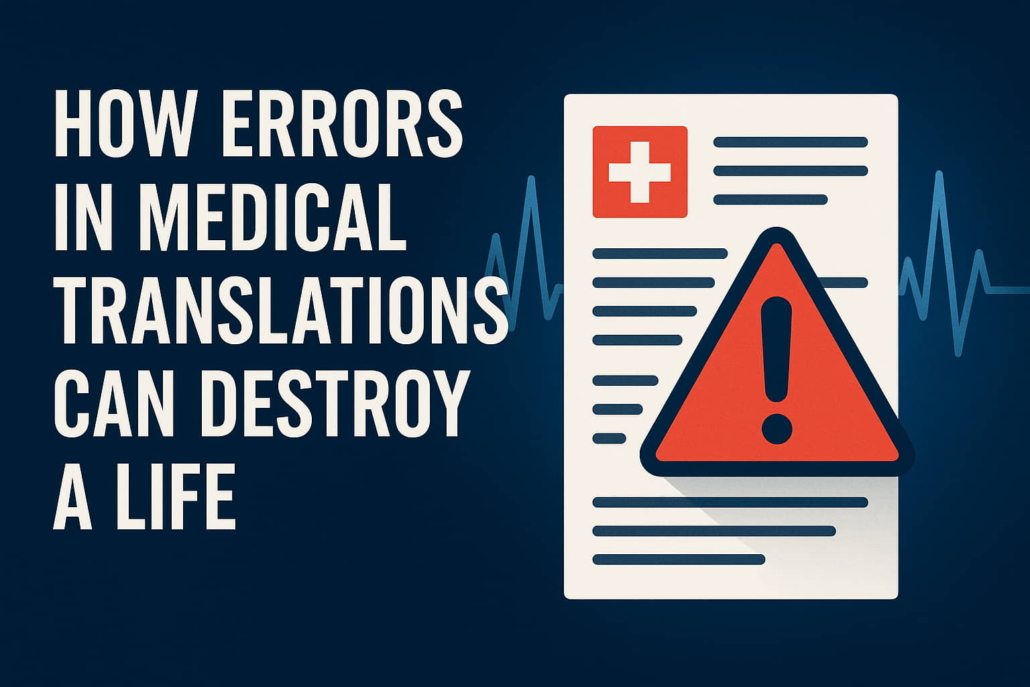
Medical translations are not just words on paper — they are a lifeline for patients, healthcare professionals, and medical device users worldwide. A single mistranslation can lead to misdiagnosis, ineffective treatment, or even death. Understanding the risks and knowing how to avoid them is critical for any healthcare provider, medical device manufacturer, or pharmaceutical company.
The High Stakes of Inaccurate Translations
When it comes to health, mistakes are unacceptable. Errors in medical translations can:
- Cause patients to misunderstand dosage instructions
- Lead doctors to administer the wrong treatment
- Delay urgent care due to misinterpreted reports
- Compromise the performance of medical devices
These consequences show why accurate medical translations are not optional — they are a moral and legal necessity.
Where Do Translation Errors Occur Most Often?
Mistakes can happen in various types of medical content. Some of the most vulnerable areas include:
- Patient information leaflets — Errors here can mislead patients about how to take medication safely.
- Clinical trial documentation — Inaccuracies can invalidate research and risk participant safety.
- Medical device manuals — Poor translation of medical technology can cause device misuse.
- Doctor’s reports — A wrong term in a report can misinform other specialists, affecting treatment plans.
This is why every medical translator, translator for medical terminology, and translator for medical reports must handle content with extreme care.
Real-Life Risks: What Can Go Wrong
Inaccurate translations can have life-altering or fatal outcomes. Examples include:
- A patient misunderstanding medication dosage and overdosing
- Wrong instructions on a defibrillator causing failure during cardiac arrest
- Incorrect allergy information leading to anaphylactic shock
- Misinterpreted lab results delaying life-saving surgery
Each tragic case is a reminder of how vital it is to use professional medical translations only.
How to Prevent Life-Threatening Mistakes
To ensure safety, companies and healthcare providers should follow proven best practices:
1. Hire Certified Experts
Always work with certified professionals:
- A qualified medical translator knows medical jargon and context.
- A skilled translator for medical terminology ensures complex terms are precise.
- A reliable translator for medical reports guarantees that patient files and diagnostics are accurate and confidential.
2. Use Quality Control Processes
Implement robust QA steps:
- Multiple proofreading rounds by native-speaking specialists
- Medical expert review of translated content
- Testing translated medical devices to confirm clarity of instructions
3. Maintain Consistency with Translation Memory
Use translation memories and terminology databases to avoid discrepancies in repeated terms across documents and product lines. This safeguards the integrity of translation of medical technology over time.
Trust Matters: Choose the Right Partner
Errors are more likely when using unqualified freelancers or machine translation without professional oversight. Working with a trusted language service provider ensures:
- Regulatory compliance
- Cultural and linguistic accuracy
- Full confidentiality for sensitive patient data
Protect Lives with Professional Medical Translations
In healthcare, there is no room for guesswork. Lives depend on clear, precise, and context-appropriate translations. Don’t risk patient safety, brand reputation, or legal consequences by cutting corners.
At Janus, our certified medical translators, experts in medical terminology, and specialized teams for medical reports and medical technology ensure that your content is accurate and safe.
Contact Janus today to secure your medical translations and protect what matters most — human life.